

Norwegian Ports
Navigating Towards Sustainable Harbours
This report explores how collaboration and knowledge sharing can drive more sustainable energy use in ports, with a strong focus on reducing emissions through smart port policies.
It’s designed to help Dutch maritime businesses, sector organisations, and government bodies uncover new opportunities and partnerships in Norway’s forward-thinking maritime landscape.
Inside, you’ll find in-depth profiles of eleven Norwegian ports, key insights into maritime policy, a stakeholder analysis, and practical recommendations for sustainable development.

Norway’s extensive coastline makes shipping vital for the nation. The government, ports, and the maritime sector promote short-sea shipping as an eco-friendly alternative to road transport. Significant public investments, primarily through grant programmes, have reduced emissions in ports and vessels, with continued funding expected. These initiatives have been effective and could serve as a model for the Netherlands.
A key achievement is the installation of around 200 shore power systems in Norwegian ports. However, ship adoption of these systems has been lower than expected, shifting subsidies towards retrofitting ships and developing battery, ammonia, and hydrogen-powered vessels. Dutch agencies can learn from Norwegian investments in shore power through organisations like Enova and Innovation Norway.
Although some vessel operators are exploring hydrogen-powered ships, most Norwegian ports are hesitant to invest due to low demand. Nonetheless, the sector is increasingly exploring hydrogen solutions, making it a market to watch.
Collaboration between Dutch and Norwegian ports can support sustainable and effective port operations and may result in green shipping corridors.
Executive summary
Conversations with Norwegian Ports
To bring this report to life, we engaged directly with the people shaping Norway’s maritime future. Throughout the project, conversations were held with a range of key stakeholders — from port authorities and policy experts to sustainability leads and industry innovators.
Each exchange offered a unique perspective on how Norwegian ports are reimagining energy use and driving emission reductions. These discussions went beyond formal interviews, unfolding as dynamic dialogues filled with ideas, challenges, and shared ambitions for a greener maritime sector.
As insights were gathered from ports across the country, a common theme emerged: a strong sense of urgency paired with genuine optimism. Ports are evolving from traditional transport hubs into active drivers of the green transition.
The knowledge, experiences, and strategies shared by stakeholders have been woven into this report to help Dutch businesses, organisations, and governments identify meaningful opportunities for collaboration.
This project is about more than data and policy — it reflects people, partnerships, and the power of a shared vision for a sustainable maritime future.
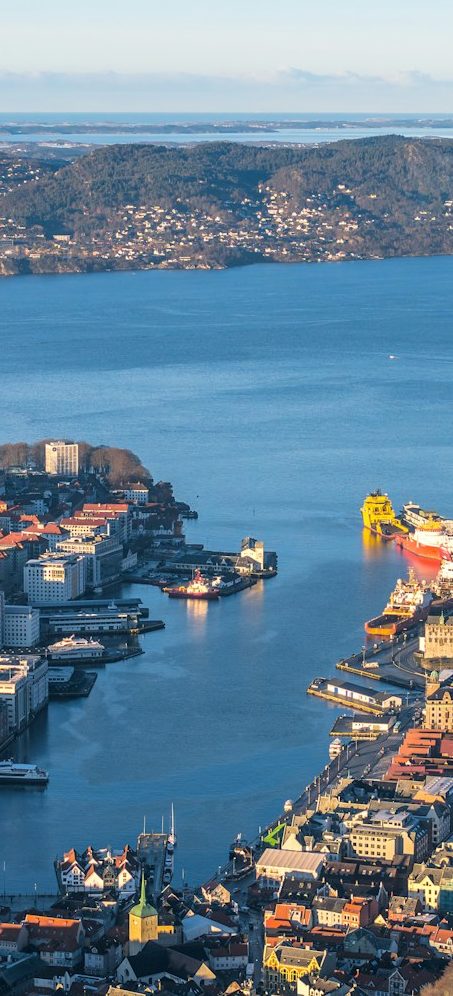
Included ports are (among others) the Port of Oslo, Port of Bergen, and Port of Stavanger.
The report Norwegian Ports: Navigating Towards Sustainable Harbours is copyrighted by the Embassy of the Kingdom of the Netherlands in Norway (© 2025) and made accesible through the Netherlands Investment Agency (RVO).